How we can help
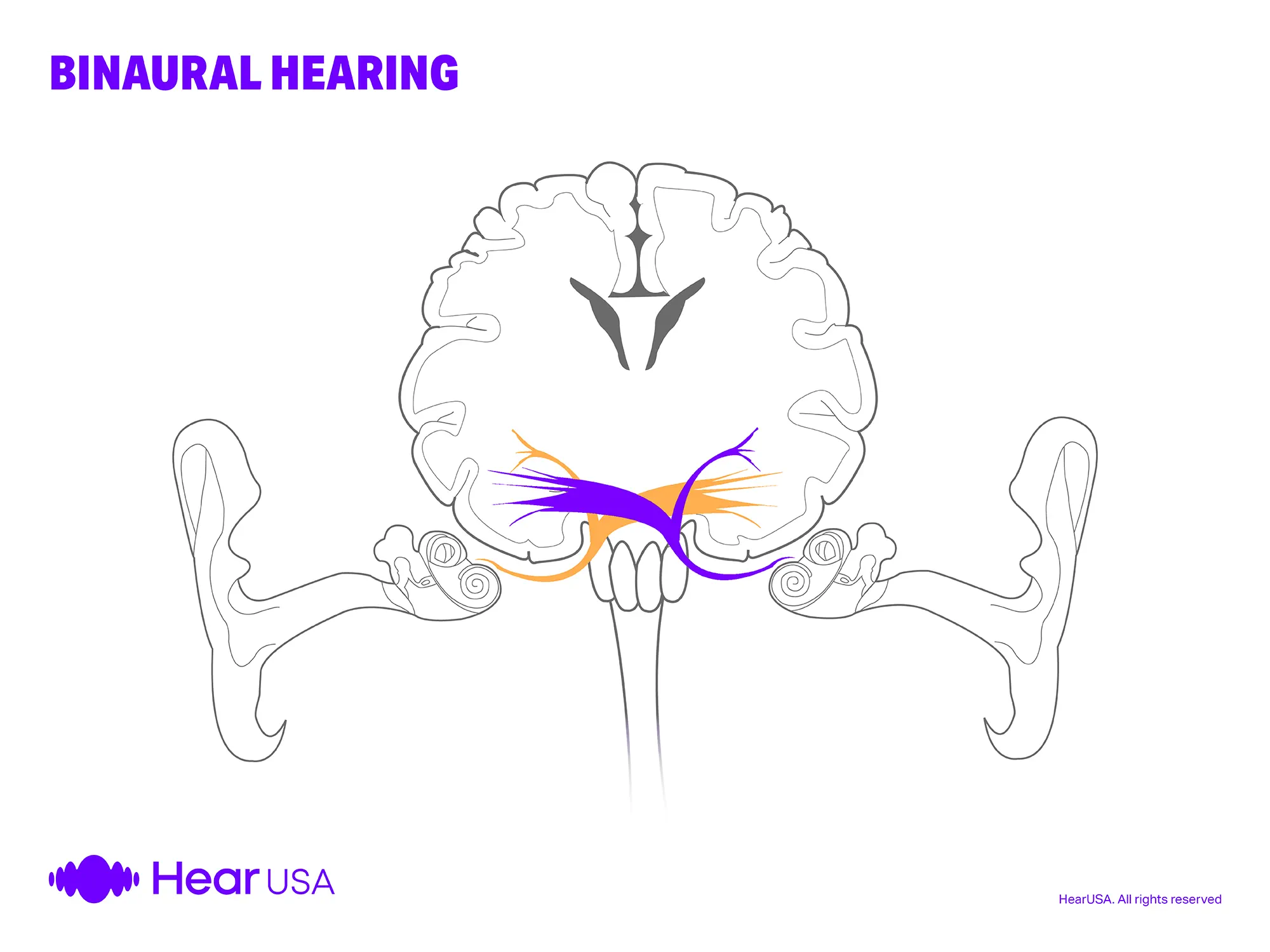
Binaural hearing

One Hearing Aid vs. Two: Which Is Right for You?

Our ears work best as a team. When both ears have hearing loss that can benefit from hearing aids, wearing two is often recommended for more balanced, natural hearing. Learn how two hearing aids can help you hear and engage with the world around you.

Why Two Hearing Aids

The Benefits of Binaural Hearing

Our ears are designed to work together. They capture sound and send signals to the brain, which processes them to help us understand speech, locate where sounds are coming from and distinguish important sounds from background noise. This is known as binaural hearing.

When hearing loss affects both ears, known as bilateral hearing loss, wearing bilateral hearing aids can provide sound input to both ears and better support the way the brain naturally processes sound. Similar to stereo sound, two hearing aids can create a fuller, more balanced listening experience and make it easier to understand conversations, enjoy music and engage with the world around you.

With unilateral hearing loss, where hearing loss affects only one ear, hearing needs are different. Depending on the type and severity of hearing loss, a hearing care professional may recommend a unilateral hearing aid or another hearing solution.

audiologist having conversation hearing loss

Hear Better With the Right Hearing Solution

Whether you need one hearing aid or two depends on your individual hearing needs. Our hearing care professionals can check your hearing and help you find the right solution.
Book appointment

One Hearing Aid vs. Two Hearing Aids

The right number of hearing aids depends on whether hearing loss affects one or both ears, as well as your individual hearing needs.

Type
Type
One hearing aid
Two hearing aids
Hearing loss pattern
May be appropriate when hearing loss affects one ear
Often recommended when both ears have aidable hearing loss
Speech in noise
Speech in noise
May make conversations more challenging when sound comes from different directions
Can make it easier to follow speech, especially in noisy environments
Sound localization
Sound localization
Can make it harder to tell where sounds are coming from
Helps the brain identify where sounds are coming from
Listening effort
Listening effort
The brain may have to rely more heavily on one ear
Provides sound from both sides, which may reduce listening effort
Cost
Cost
Lower upfront cost for one device
Higher upfront cost, but provides hearing support for both ears
Bilateral hearing loss wearing one hearing aid black icons

When One Hearing Aid May Be the Right Choice?

Two hearing aids are often recommended when both ears have aidable hearing loss, but there are situations where one may be more appropriate. For example, if you have unilateral hearing loss and only one ear needs amplification, a single hearing aid may provide the support you need.

If one ear has little or no usable hearing, a traditional hearing aid may not be suitable for that ear. In these cases, CROS hearing aids can help by sending sound from the poorer-hearing side to the better-hearing ear.

A hearing care professional can assess your hearing in both ears and recommend the solution that best fits your needs.

Benefits of Wearing Two Hearing Aids

  • Clearer conversations
    Hearing with both ears can make it easier to understand speech and follow conversations, particularly when several people are talking or there is background noise.
  • Better sound quality
    Two hearing aids provide sound input from both sides, helping create a more balanced and natural listening experience.
  • Better sound localization
    Our brains compare information from both ears to determine where sounds are coming from. Wearing two hearing aids can support this ability and help you stay more aware of your surroundings.
  • Consistent auditory stimulation
    When hearing loss affects both ears, wearing two hearing aids provides regular sound input to both sides of the auditory system and helps support binaural hearing.
  • A fuller hearing experience
    Hearing from both sides can give you greater access to sounds around you, especially when voices or other important sounds come from different directions.
  • Less listening effort
    Straining to hear can be tiring, particularly in challenging listening environments. Two hearing aids can make listening and following conversations easier, helping you feel more comfortable and engaged.

Wearing hearing aids helps you interact with your friends and family
break the silence. take charge

Act Now and Test Your Hearing for Free

Knowledge is power. An online hearing screening is an easy way to get a general view of your hearing abilities. Test your hearing in both ears and get instant results.
Online hearing screening

Can Two Hearing Aids Help With Tinnitus?

Tinnitus can cause ringing, buzzing or other sounds that may interfere with everyday activities, concentration and relaxation. For people who also have hearing loss, hearing aids for tinnitus may help make tinnitus less noticeable by improving access to external sounds.

When hearing loss affects both ears, two hearing aids may be recommended to provide a more balanced listening experience and support tinnitus management. However, the right approach depends on your individual hearing loss, tinnitus symptoms and hearing needs.

Learn more about how hearing aids may help with tinnitus or book an appointment at one of our hearing centers to discuss your options with a hearing care professional.

FAQs

Yes, in some cases. If hearing loss affects only one ear, one hearing aid may be appropriate. The right solution depends on the type and degree of your hearing loss and whether each ear can benefit from amplification.
If both ears have hearing loss and can benefit from hearing aids, two are often recommended. Wearing two hearing aids provides sound input to both ears and can support speech understanding, sound localization and more balanced hearing.
When hearing loss affects both ears but only one is fitted with a hearing aid, the unaided ear receives less access to sound. Over time, this may affect how well that ear processes speech. A hearing care professional can determine whether one or two hearing aids are appropriate for you.
No. Wearing two hearing aids isn't about making sounds twice as loud. Instead, two hearing aids work together to provide sound from both sides, supporting more balanced and natural hearing.

Next steps to better hearing

Hear the songs of the forest thanks to hearing aids

How human hearing works

Discover how your ears and brain work together to process sound and help you understand the world around you.
Listening to music wearing hearing aids getting the best sound expirience

Hearing aids

Learn about hearing aid types, styles and technology to find a solution that fits your hearing needs and lifestyle.
audiologist having conversation hearing loss

Health insurance info

Learn how hearing aid insurance works and explore your coverage and benefit options.
Rexton hearing aids is tested to demanding situations

Don't miss a beat

Sign up for our newsletter to stay informed and learn more about protecting and improving your hearing health.
Sign up

Talk to an expert in one of our hearing centers.

Book appointment

Have questions or need assistance?

Call us 855 252 5312

Find your nearest hearing center.