
How we can help
hearusa woman with hearing aids

Understanding sudden hearing loss

Sudden hearing loss can happen without warning and should never be ignored. Whether sounds suddenly feel muffled, one ear feels blocked, or you notice ringing or dizziness, getting your hearing checked quickly is important.

Book an appointment today to identify the cause and get the care you need as soon as possible.

Book appointment
On this page:

Sudden Hearing Loss Explained

What is Sudden Hearing Loss?

Sudden hearing loss is a rapid change in hearing that can happen within hours or over a few days, often in one ear. Some people describe it as muffled hearing, a blocked sensation, ringing in the ear, or sudden difficulty understanding conversations.

While the cause is not always clear, sudden hearing loss should be taken seriously, as early treatment may improve the chances of recovery. If you notice sudden changes in your hearing, schedule an appointment with a Hearing Care Professional as soon as possible.

Book an appointment icon at HearUSA

Don't wait!

Because sudden hearing loss can sometimes be a medical emergency, it’s important to seek care as soon as possible. Early treatment may improve the chances of recovery, so sudden changes in hearing should never be ignored.

Common Causes of Sudden Hearing Loss

What Causes Sudden Hearing Loss?

Sudden hearing loss can happen for several reasons, although in many cases the exact cause is unknown. Possible causes may include viral infections, head injuries, circulation problems affecting the inner ear, loud noise exposure, or certain medications.

In some cases, sudden hearing loss may also be linked to underlying medical conditions. Because the cause is not always obvious, it’s important to have your hearing checked by a Hearing Care Provider.

audiologist having conversation hearing loss

Common Signs of Sudden Hearing Loss

Sudden Hearing Loss Symptoms​

Sudden hearing loss is a rapid change in hearing that happens within hours or over a few days, often in one ear. Some people notice the change immediately when they wake up, while others realize it when using the affected ear during phone calls or conversations. Because sudden hearing loss can sometimes require urgent medical attention, it’s important not to ignore these symptoms

In many cases, sudden sensorineural hearing loss (SSHL) affects only one ear. Your hearing care provider can perform a hearing screening and examine the ear to rule out possible causes such as earwax buildup, inflammation, or fluid in the ear.

Common signs and symptoms of sudden hearing loss may include:
Get a new career with HearUSA as a Client Experience Specialist

Book Your Free Hearing Screening with HearUSA

  • Free screenings & hearing aid demos
  • 380+ locations with 400+ experts
  • Voted Best Nationwide Hearing Aid Solutions Company 2025
Find your local hearing center

Sudden Hearing Loss Audiogram

Decoding Your Hearing Test Results

A hearing test for sudden hearing loss may show that certain sounds, especially higher-pitched sounds, are harder to hear. The results can vary from person to person depending on the cause and severity of the hearing loss.

Some people may experience only mild hearing changes, while others may notice a more significant drop in hearing in one ear.

Your hearing test results will be displayed on an audiogram, which is a chart that shows the softest sounds you can hear at different pitches.

On the audiogram below, the blue X symbols represent the left ear, while the red O symbols represent the right ear. A Hearing Care Professional will review these results with you and explain what they mean for your hearing health.
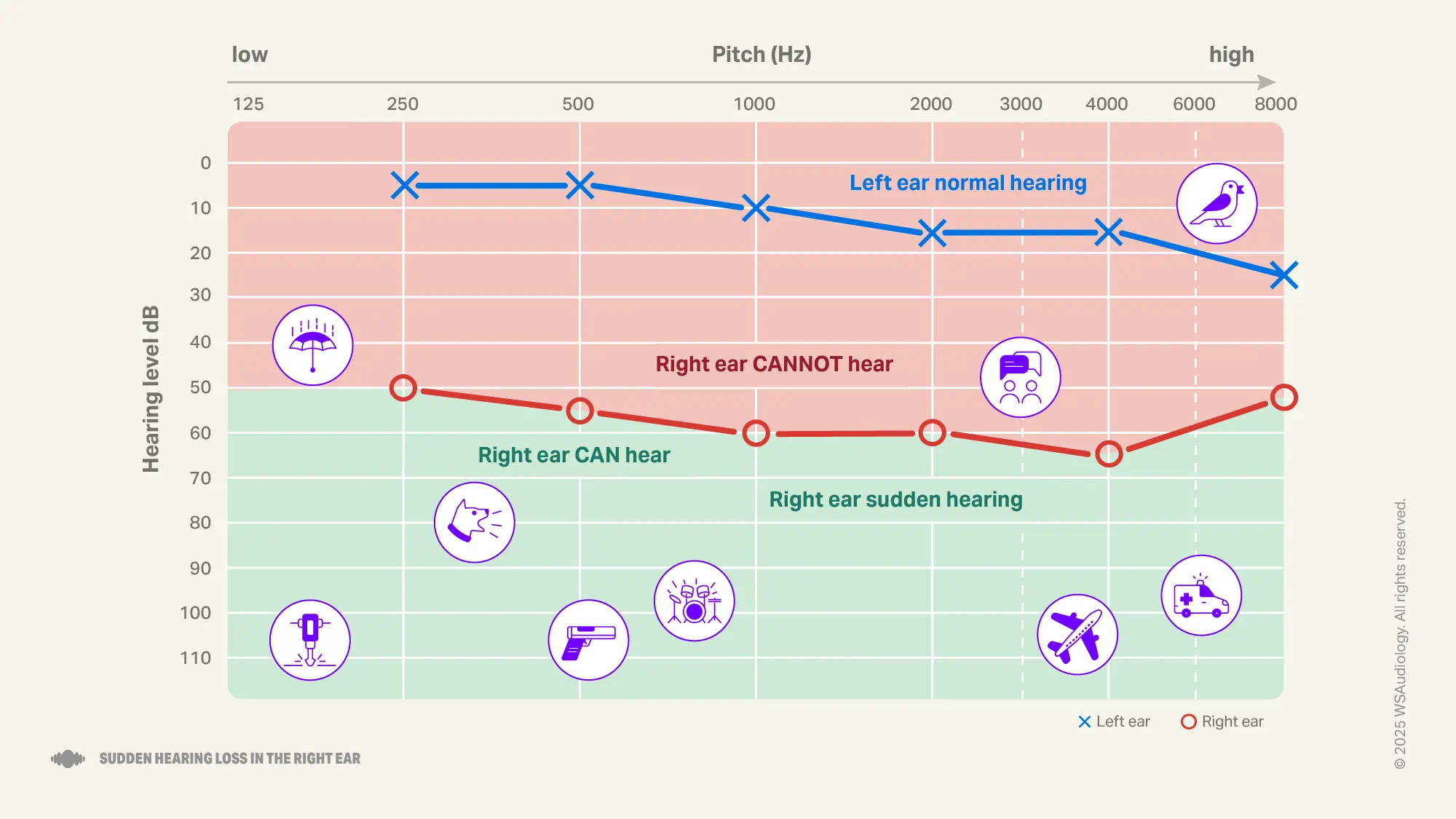
Sudden hearing loss right ear audiogram

Sudden Hearing Loss Prevention

How to Prevent Sudden Hearing Loss?

Sudden hearing loss can be a frightening and unsettling experience, but there are steps you can take to prevent some cases. Two of the main causes of sudden hearing loss - inner ear damage and circulation problems - can be prevented by:


woman on a concert, being happy wearing hearing aids

Avoid Loud Noise

It’s important to protect your ears from hazardous levels of sound. This can include wearing earplugs or noise-cancelling headphones in noisy environments, avoiding loud concerts and music, and using sound-dampening techniques at work or when using power tools.
best hearing aids for  sports

Maintain a Healthy Lifestyle

Regular exercise, a balanced diet, and avoiding harmful substances, such as tobacco and alcohol, can help reduce circulation problems. Regular check-ups can also help detect circulation issues before they cause hearing loss.

Treating Sudden Hearing Loss

Sudden Hearing Loss Treatment

The majority of SSHL causes are often unknown, making treatment difficult. In these cases, corticosteroids are generally prescribed to reduce inflammation and target illnesses. If an infection is identified, antivirals or antibiotics can help to address the issue.

Your Hearing Care Professional or doctor may also recommend switching or stopping particular medication that may be causing your SSHL. Because causes of sudden hearing loss can vary, the specific course of action is a very personalized process.

Did You Know?

High Altitude

Sudden hearing loss can be caused by a change in altitude. This is because changes in atmospheric pressure can affect the pressure in the inner ear, leading to sudden hearing loss in some people. So, if you're a frequent flier or love to take trips to high-altitude destinations, keep this in mind!

Expert Advice

Rest and Relaxation

Research has shown that stress and anxiety can contribute to sudden hearing loss and, by reducing stress levels, you may be able to alleviate symptoms and prevent future occurrences. Try practicing stress-reducing activities, such as yoga, meditation or deep breathing. 

FAQs

Frequently Asked Questions

While the cause of sudden hearing loss is often unknown, there are several factors that can lead to a sudden loss in hearing. These include, but are not limited to, some sort of viral or bacterial infection, inner ear disorders (particularly Méniére's disease), an injury to the head, certain ototoxic medications, neurological or autoimmune diseases, or a tumor on the auditory nerve.
Sudden hearing loss effects vary depending on cause and timeliness of treatment. While about half of sudden hearing loss cases may clear up on their own within a couple of weeks, the duration of your hearing loss and ability to recover successfully is highly dependent on a timely and efficient treatment process. With proper medication, such as steroids to fight a possible infection or inflammation, sudden hearing loss may clear up within approximately 1 month. In some cases, some degree of hearing loss may be permanent.
Corticosteroids are the most common form of treatment for sudden hearing loss, particularly if the cause of the hearing loss is not known. Other treatment options vary depending on the cause. For example, infections may be treated with antibiotics and viruses with antivirals. If there are other underlying causes, such as autoimmune diseases, ototoxic drugs or other cardiovascular diseases, your Hearing Care Professional or doctor can help to determine the best course of action.
A sudden loss of hearing in one or both ears should always be treated as an emergency. The sooner treatment is started, the better the chances are of recovering some or all of your hearing abilities. If you have a loss of hearing that has come on suddenly or over a period of one to three days, visit your doctor immediately.
While more research is necessary to better understand the long-term effects of sudden hearing loss, recurrence of sudden hearing loss is rare. For those that do experience a recurrence in sudden hearing loss, recurrence may be on the same or opposite side.

Next Steps to Better Hearing

At HearUSA ur test, advise, fit and go service means in one visit you can leave with new hearing aids

Book a complimentary hearing appointment

Think you have a hearing loss?

Book an appointment at one of our Hearing Centers. The hearing screening is complimentary with no strings attached. You are also welcome to book with us for a demo of one of our hearing aids. Fill in the form below.

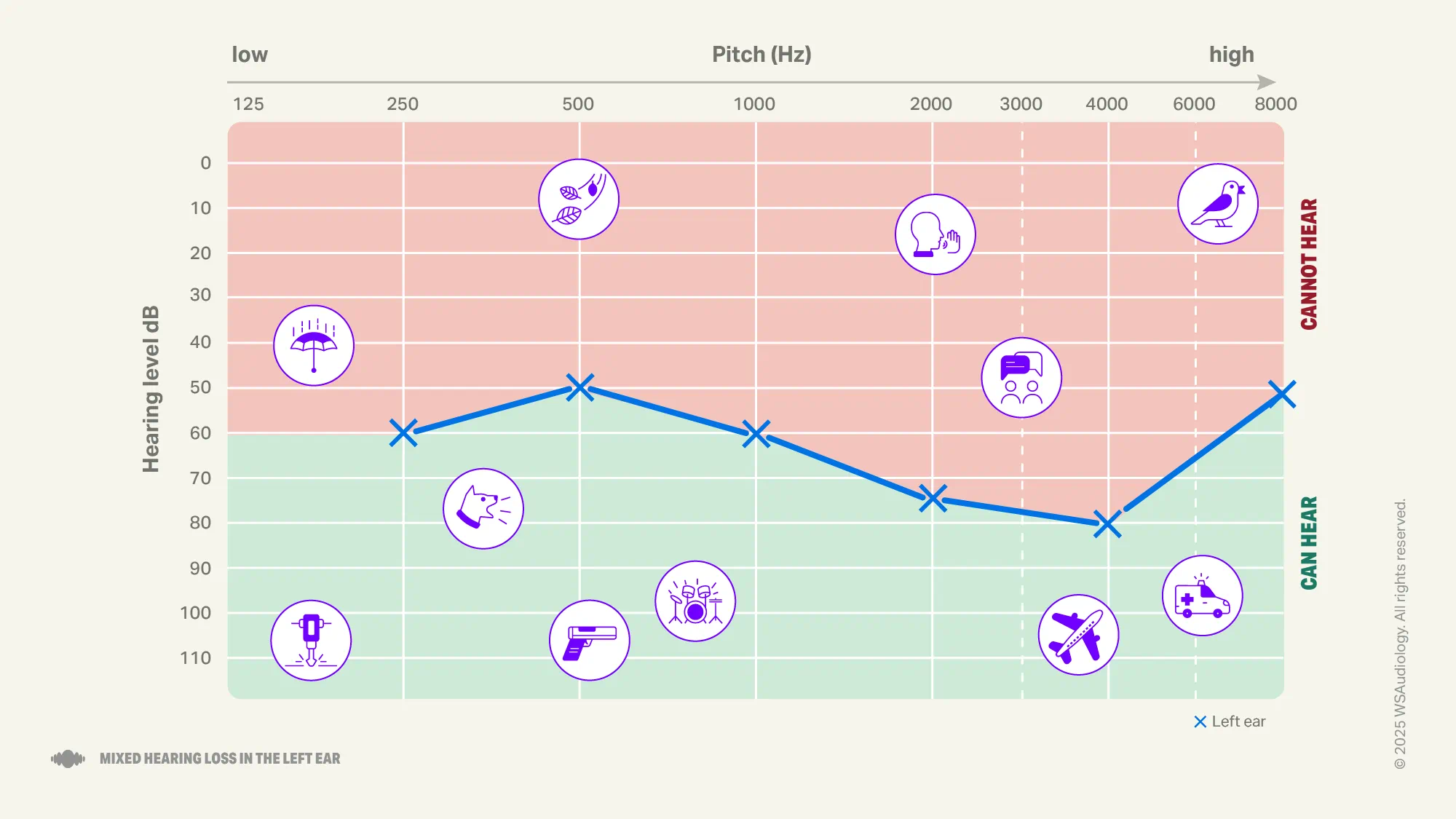
Mixed hearing loss audiogram

How to Treat Your Hearing Loss

Hearing health is one of the building blocks of a happy life. If you can understand how your hearing works and what you can do to protect it, you won't just be doing your ears a favor, you'll be boosting your overall health and well-being, too.
Get a free demo of hearing aids at HearUSA

Getting help for your hearing loss

Hearing loss not only affects how you hear, but how well your brain is able to function. From protecting your physical and mental well-being to improving your career outlooks, your hearing plays an essential role in it all. With HearUSA by your side, you’ll have all the tools you need to stop the effects of hearing loss and start hearing better today.

Types of Hearing Loss

Explore More Options
Rexton hearing aids is tested to demanding situations

Don't miss a beat

Sign up for our newsletter to stay informed and learn more about protecting and improving your hearing health.
Sign up

Talk to an expert in one of our hearing centers.

Book appointment

Have questions or need assistance?

Call us 855 252 5312

Find your nearest hearing center.