
Hearing Loss by Age
What Is Age-Related Hearing Loss?
Age-related hearing loss, also known as presbycusis, comes from the Greek words presbys, meaning “old”, and akousis, meaning “hearing”. It’s a lot like irreversible balding: once the hair cells in your inner ear are damaged, they don’t grow back.
Often occurring gradually as we get older, age-related hearing loss generally affects your ability to hear high-pitched frequencies and usually occurs in both ears. Since it occurs over time, those dealing with the condition may not notice it at first.
Get Your Free Screening + Free Hearing Health Flyers
What Causes Hearing Loss in Old Age?
It’s common for hearing to gradually decline with age. In many cases, age-related hearing loss happens because of natural changes in the inner ear over time. The tiny hair cells responsible for sending sound signals to the brain can become damaged or wear down with age, making it harder to hear clearly, especially higher-pitched sounds and conversations in noisy environments.
Genetics can also play a role, meaning some people are more likely to experience hearing loss as they get older. However, aging itself is often only part of the picture. Long-term lifestyle and health factors may contribute to hearing changes over time.
Common causes and contributing factors include:
- Long-term noise exposure
Years of exposure to loud sounds, such as machinery, concerts, power tools, or loud music, can permanently damage the delicate hair cells in the inner ear. This damage often builds gradually over time and may become more noticeable later in life.
- Inner ear changes
Natural aging can affect the inner ear, auditory nerve pathways, and the way the brain processes sound. These changes are one of the leading causes of hearing loss in older adults.
- Genetics
Some people inherit a higher risk of developing age-related hearing loss. If hearing loss runs in your family, you may be more likely to experience hearing changes as you age.
- Health conditions
Certain medical conditions can affect blood flow and nerve health, which may impact hearing. Conditions commonly linked to hearing loss in older adults include diabetes, high blood pressure, heart disease, and obesity.
- Ear infections and earwax buildup
Although not directly caused by aging, untreated ear infections or excessive earwax buildup can temporarily worsen hearing difficulties and make age-related hearing loss feel more severe.
- Certain medications
Some medications can damage the inner ear or auditory nerve, especially when used long term or in high doses. These are known as ototoxic medications and may include certain antibiotics, chemotherapy drugs, and high doses of aspirin.

Age-Related Hearing Loss Symptoms
66% of people over 65 are coping with hearing loss. If you answer yes to most of the following questions, it’s time to take action and nip these challenges in the bud.
- When two or more people are talking at the same time, do you feel like you are on the outside looking in?
- Do your friends or family say you turn up the volume too loud?
- Does the telephone seem like it’s nearly on mute?
- Do noisy backgrounds drive you bananas?
- Do you find yourself (willingly) asking others to repeat themselves?

Decoding Your Hearing Screening Results
Age-Related Hearing Loss Audiogram
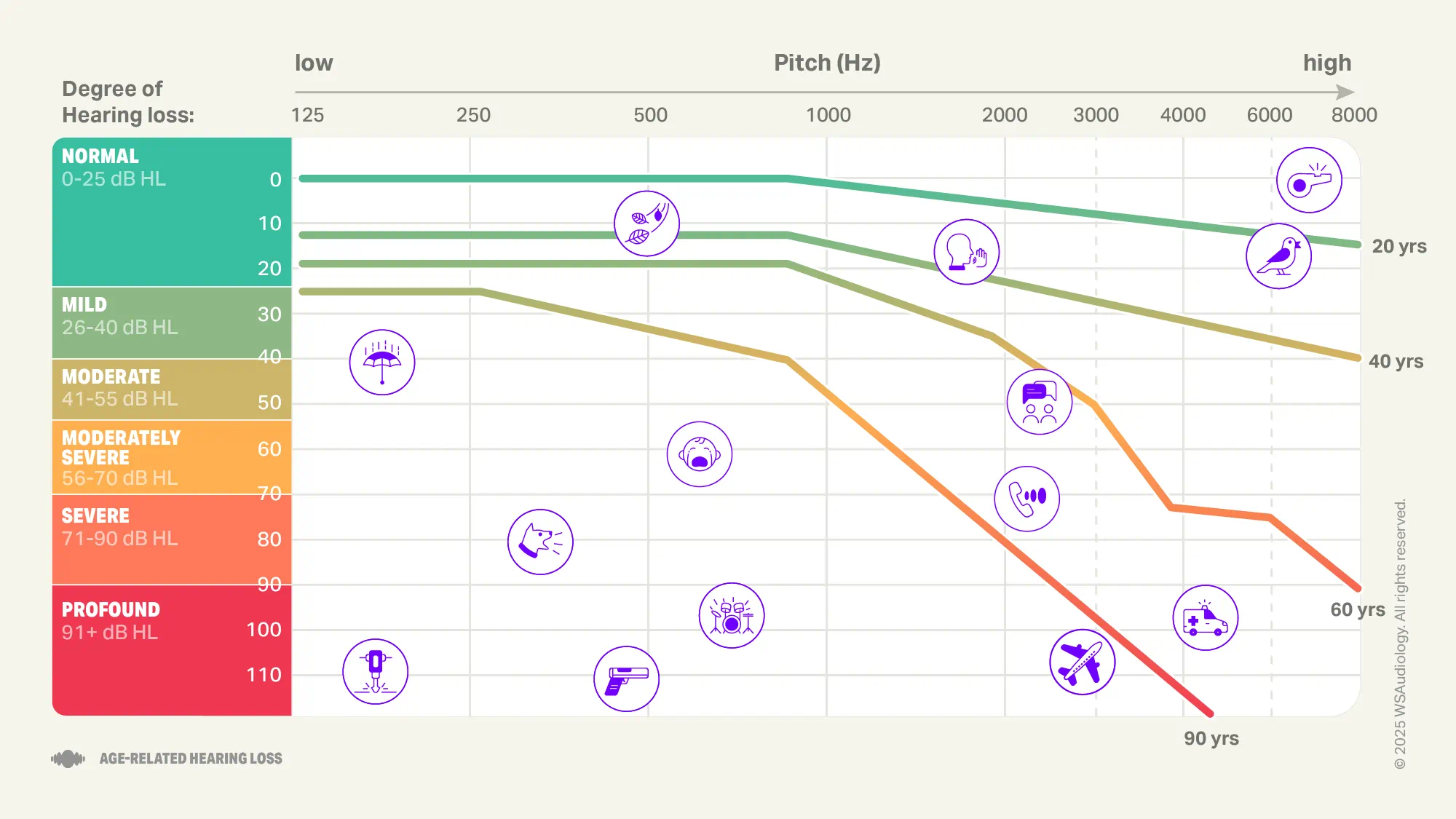
Age-related hearing loss audiograms typically show a pattern of hearing loss that is greatest in the high-frequency range. With hearing loss in this range, it can be hard to hear birds chirping, doorbells and telephones ringing, and children’s and women’s voices.
The degree of hearing loss can vary depending on the individual and the severity of the age-related changes in the auditory system. In many cases, the hearing loss is bilateral and symmetrical, meaning that it affects both ears equally.
The audiogram may show a sloping pattern, where the hearing threshold is worse in the high frequencies and improves towards the low frequencies. The speech discrimination scores may also be reduced, particularly in noisy environments.
Overall, audiograms can provide valuable information about the type, degree, and configuration of the age-related hearing loss, which can help guide treatment options and management strategies.
This chart below helps show which pitches and volumes a person can hear, which can help identify the type and level of hearing loss.
How to Support Your Hearing as You Age
Age-related hearing loss, also known as presbycusis, is a common condition that affects many older adults. But just because it's common, doesn't mean it's inevitable. In fact, there are several steps you can take to help protect your hearing as you age and ensure you can enjoy all the sounds of life for years to come.
- Avoid loud noise
Wearing earplugs or noise-cancelling headphones in loud environments, such as at concerts or while mowing the lawn, can help protect your hearing.
- Put your health first
Maintaining an overall healthy lifestyle can help prevent further damage to your ears. A healthy diet, regular exercise, avoiding smoking and managing stress all play a role.
- Check your hearing
As we age, it’s important to keep an eye on our hearing health. Regular check-ups can help ensure you catch changes or issues early on.
Why Untreated Hearing Loss Shouldn’t Be Ignored
Hearing is an essential part of our health and well-being. That's why treatment is so important. Not only can healthy hearing help physically protect us in a fast-paced, busy world, it can prevent social isolation and depression as well. Hearing loss can also lead to a reduction in brain stimulation, as sounds we should be hearing aren't getting through. This can lead to memory loss and even dementia.
For these reasons, it’s essential to treat your hearing loss early. That could include exploring hearing aid options that suit your needs and even taking them for a screening drive with a complimentary demo. If you or a loved one is living with hearing loss, there are solutions. Book a complimentary online consultation with one of our Hearing Care Professionals and take back your hearing health today.
Age-related hearing loss: FAQ
What is age-related hearing loss?
What are the symptoms of age-related hearing loss?
How does age-related hearing loss affect daily life?
When should I see a doctor about age-related hearing loss?