
What Are the Types of Hearing Loss?
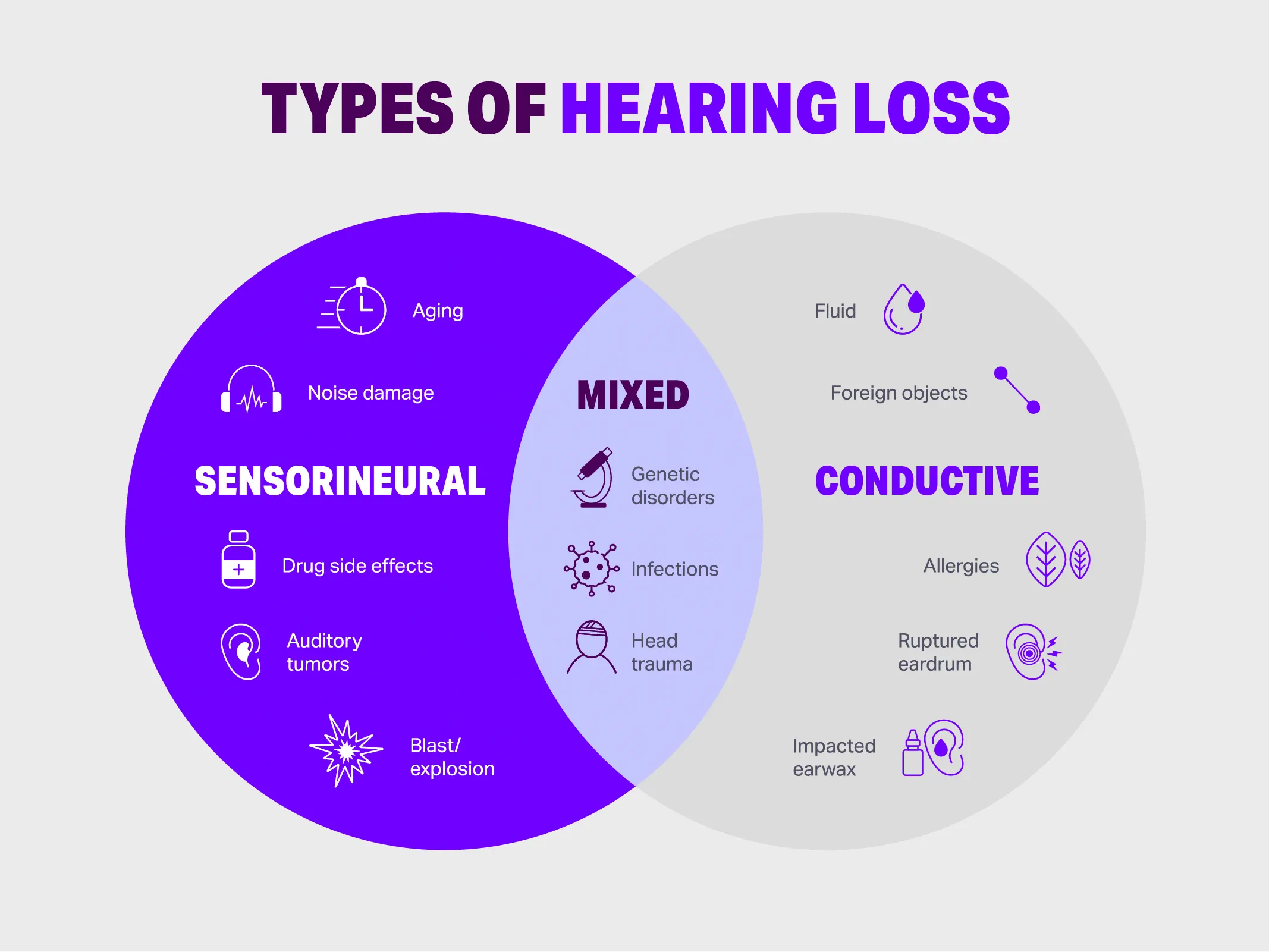
There are 3 types of hearing loss: sensorineural hearing loss, conductive hearing loss, and mixed hearing loss.
The type of hearing loss is determined by the part of the ear that is affected.

Understanding the different types of hearing loss can help you recognize changes early and stay connected to the people and moments that matter most.
Full size

Concerned About Your Hearing? Find Out in Minutes.
Take our free online hearing test to better understand your hearing and discover whether a professional screening may help.
Subcategories of Hearing Loss Types
Other Types of Hearing Loss
In addition to the main types of hearing loss, hearing loss can also be classified based on how and where it occurs.
Learn more about bilateral hearing loss, unilateral hearing loss (hearing loss in one ear) and sudden hearing loss below.
Age, noise, wax or medical conditions
What could be the cause of your hearing loss?
There are many different reasons and causes. Sometimes a hearing loss can be as simple as too much earwax or a temporary ear infection. Let's look into the more common causes such as age and noise:
Age-Related Hearing Loss
More often than not, the most common type of hearing loss happens to all of us - aging.
Age-related hearing loss is a form of sensorineural hearing loss that happens as our nerves and hearing ability start to wear down over time.
Age-related hearing loss is a form of sensorineural hearing loss that happens as our nerves and hearing ability start to wear down over time.


Noise-Induced Hearing Loss
Too much noise = good vibrations but also bad hearing later down the line. Loud music feels good, but has a hidden cost. Other factors such as noisy work environment, DIY jobs at home with noisy tools can also cause hearing loss.

FAQs
What is the most common type of hearing loss?
Sensorineural hearing loss is the most common type of hearing loss. It occurs when the inner ear (cochlea) or hearing nerve becomes damaged, often due to aging, noise exposure, certain medical conditions, or genetics. This type of hearing loss is typically permanent, but treatment options such as hearing aids can help improve communication and quality of life.
Which types of hearing loss can hearing aids help?
Hearing aids can help many people with sensorineural, conductive, and mixed hearing loss, depending on the cause and severity of their condition. By amplifying sounds and improving speech clarity, hearing aids can make it easier to participate in conversations and everyday activities. A hearing care professional can recommend the most appropriate treatment based on your specific hearing needs.
Can hearing loss be temporary?
Yes, some forms of hearing loss can be temporary. Temporary hearing loss is often caused by factors such as earwax buildup, ear infections, fluid in the ear, or temporary exposure to loud noise. In many cases, hearing returns once the underlying cause is treated or resolves on its own. However, any sudden or unexplained change in hearing should be evaluated by a healthcare professional as soon as possible.

Don't miss a beat
Sign up for our newsletter to stay informed and learn more about protecting and improving your hearing health.